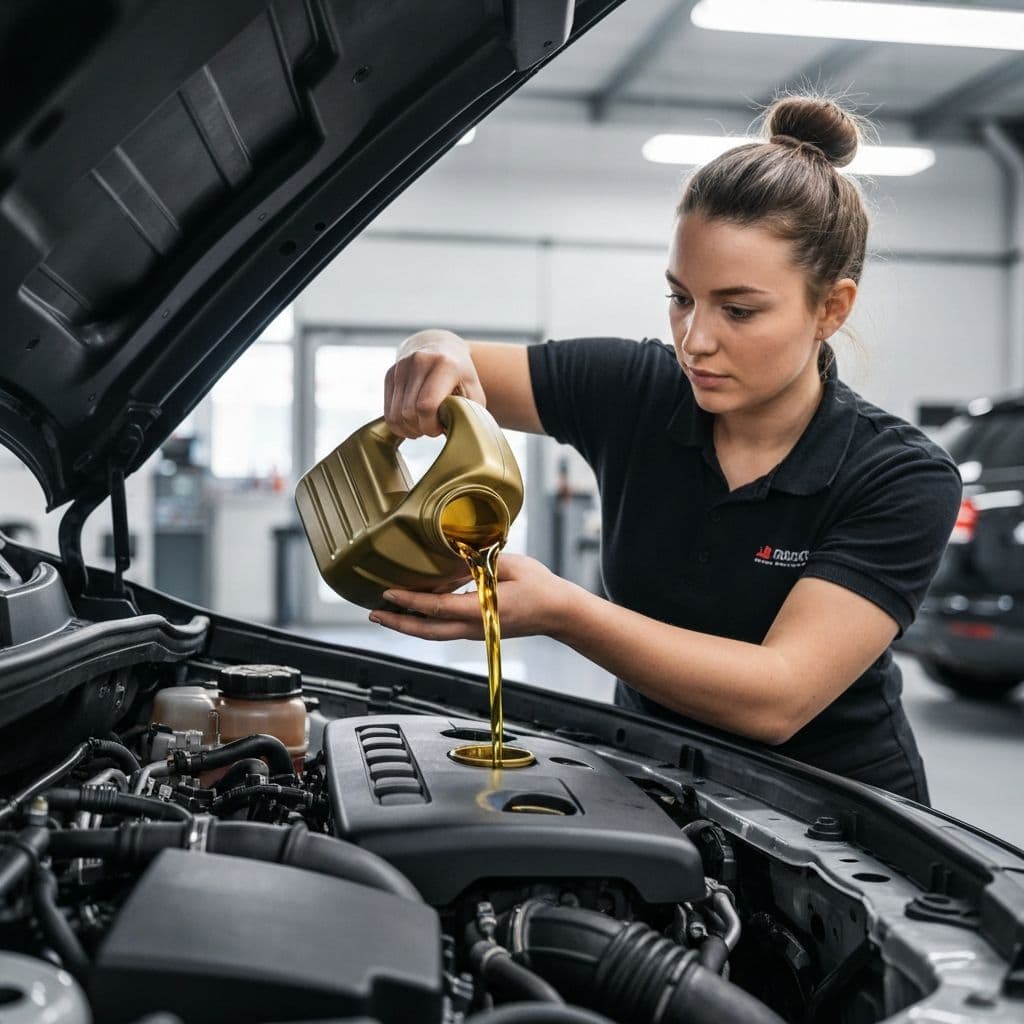
A modern car can go 200,000 miles or more, and with consistent maintenance many reach 300,000. Here's the order of maintenance our Tualatin shop follows to get there, starting with the oil.
Quick answer: A modern car from a reliable brand can go 200,000 miles or more if you follow its service intervals, and with consistent maintenance many reach 300,000. Oil changes matter most: every 5,000 miles for most cars, and at least once a year even if you don't drive much. Start the other fluid services, like transmission and coolant, around 30,000 miles instead of waiting.
Ask around and you'll hear that most cars are done somewhere around 150,000 to 200,000 miles. Plenty are. But plenty keep going well past that, and the difference usually isn't luck or the badge on the grille. It's how they were maintained.
So how many miles can a car last? At Sherwood Auto Repair in Tualatin, the goal we plan around is 300,000. Most of the people we see aren't trading in every four years. They bought a new or lightly used car and want to drive it a long, long time. Here's how we help them get there.
How Many Miles Does a Car Last on Average?
Consumer Reports says a modern car from a brand known for reliability should be capable of 200,000 miles or more if you follow the manufacturer's service intervals. That's a fair baseline.
The better question is how long you want to keep your car, because your goal changes the plan. Perry Martin, our concierge, put it this way: "If you come in and say, I want to drive the vehicle for 400,000 miles, well, this is how we get you there. It's a maintenance plan."
What Maintenance Matters Most for a High-Mileage Car?
If you only do one thing, change your oil. When we asked Perry what else people put off that ends up costing them, he was clear that nothing else is close. "Oil changes are way out front," he said, "and then they're all pretty neck and neck." Transmission fluid, brakes, the cooling system and fuel system service come next, at intervals of roughly 15,000 to 30,000 miles depending on the car.
| Priority | Service | How often |
|---|---|---|
| 1 | Oil and filter | Every 5,000 miles for most cars, and at least once a year |
| 2 | Transmission, brakes, cooling and fuel system service | Roughly every 15,000 to 30,000 miles, depending on the car |
| Ongoing | Inspection | Every visit, so small problems get caught early |
Transmission fluid deserves a special mention. A modern transmission is one of the most expensive parts of the car to replace, and skipping its fluid service is how a lot of them fail early.
But the timing matters as much as the list. "You can go 100,000 miles without doing anything except for oil changes," Perry said, "but you're not going to go 200,000 miles, even if you start doing everything at 100,000 miles." That's why we suggest servicing coolant, transmission and differential fluids starting around 30,000 miles instead of waiting for 60,000 or for "lifetime" fluid to give out.
How Often Should You Change Oil? By Miles and by Time
For most cars we recommend our 5,000-Mile Service, which includes an oil and filter exchange, a tire rotation and an inspection. Oil breaks down with heat and time no matter the brand. "It's just physics," Perry says.
Don't drive much? The calendar still counts. Our team's guidance is to service the oil at least once a year, and twice a year is better. Engines aren't perfectly sealed, moisture gets in (we live in Oregon, after all), and oil additives break down whether the car is driven or not.
What about oils advertised for 25,000 miles? "I bet you can," one of our team said. "I'm not sure you're going to get another service." In other words, the oil might survive that long. The engine is the part we're worried about.
As we understand it, longer factory intervals are partly about lowering the cost of ownership during the years the manufacturer is on the hook. That's a reasonable business decision. It's just not the same as what's best for an engine you want running at 300,000 miles.
What Does Consistent Maintenance Look Like?
We have a neighbor who brings in a 21-year-old car, right on schedule, every time. In all those years we've never replaced a single gasket on it, and it's never needed cooling system repairs. "There isn't even an oil leak," our team said. "Not a one." Nothing special about the car. Every service interval was kept, that's all.
Regular visits also mean small problems get caught while they're cheap. On one routine 5,000-mile service, our technician found engine oil on the ignition coil while the spark plugs were out, traced it to a failing spark plug tube seal and replaced the valve cover gasket in the same visit. You can read that story in Oil on Your Spark Plug? Here's What One Routine Service Found. The same goes for the brakes, which get a look at every visit too. Here's what a brake inspection checks.
What Happens When Maintenance Gets Put Off?
Life gets busy. Back to school, the holidays, an election season or just an uncertain economy, and people stop scheduling service. We see it every time. "When we are not seeing the cars," Perry said, "the tow trucks are showing up a lot more regularly." The work shifts from preventing problems to fixing broken cars, and that always costs more.
It's a lot like taking care of yourself. Let things slide and recovery is harder and more expensive. Staying a little ahead of it is cheaper, even with parts and labor costing more than they used to. And a new car costs more than ever too.
Frequently Asked Questions
Can a car last over 300,000 miles?
Yes. Many cars reach 300,000 miles with consistent maintenance: regular oil changes, fluid services on schedule and small problems fixed before they grow. Maintenance history matters as much as the make and model.
How often should I change my oil if I don't drive much?
At least once a year, even if you haven't hit the mileage. Twice a year is better. Oil breaks down over time and moisture builds up in the engine whether you drive or not.
Is it okay to buy a car with 200,000 miles?
It can be, if the service records are good and a pre-purchase inspection checks out. A high-mileage car with documented maintenance is often a better bet than a lower-mileage car that's been neglected. Our used car buying guide covers what to look for.
Plan for the Miles You Want
The short version: oil comes first, by miles and by the calendar. Start the other fluid services around 30,000 miles, not 100,000. And regular inspections are how small problems stay small.
If you'd like to build a maintenance plan around how long you want to keep your car, we'd be glad to talk it through. We see drivers from Sherwood, Tigard and all over Tualatin. Schedule a visit with Sherwood Auto Repair. We back our work with a 60-month/75,000-mile labor warranty, so you can drive worry-free.
Ready to schedule your next service?
Our team is here to give you an honest assessment and expert repairs.
Schedule an Appointment