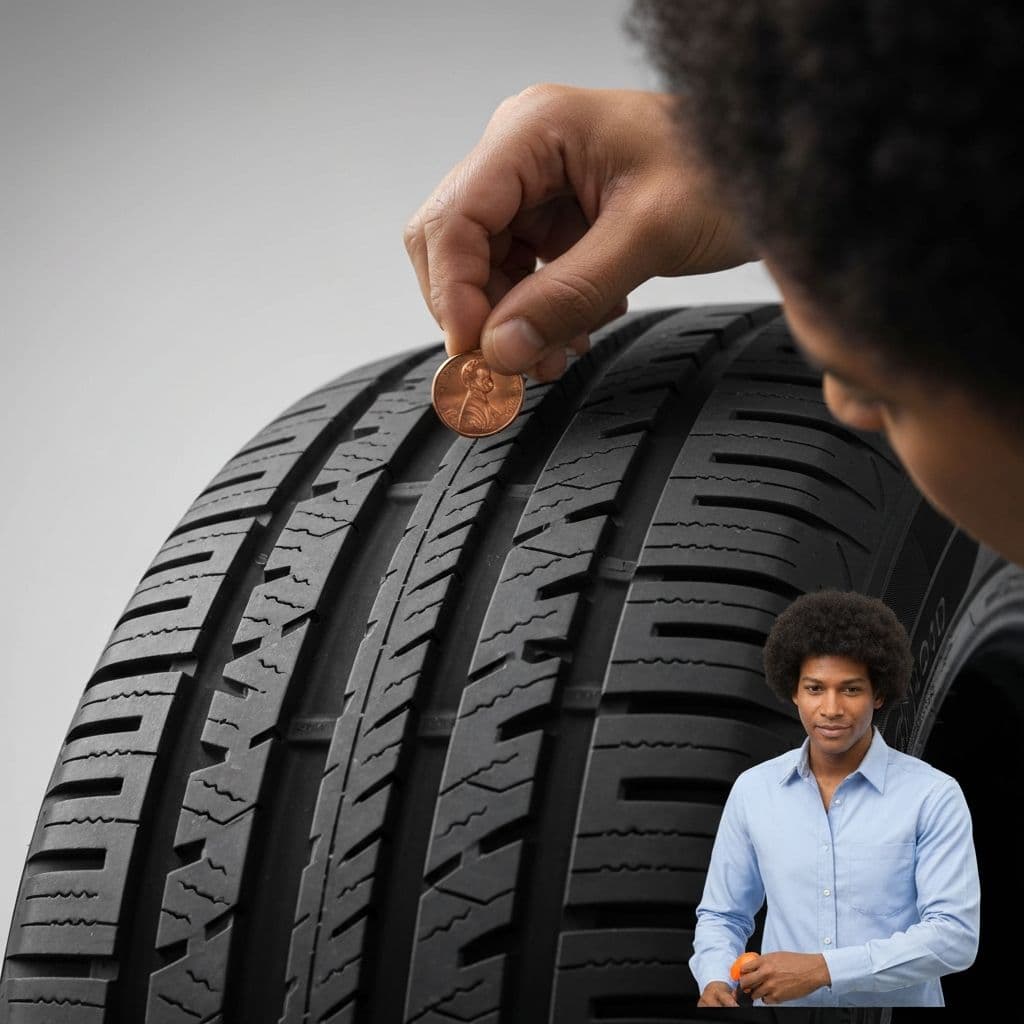
How to tell when to replace tires: check tread with a penny or quarter, read the tire's date code, and spot the damage that means a tire is done, from Tualatin mechanics.
Updated October 2026
Quick answer: If you drive on wet Oregon roads, replace your tires when the tread reaches 4/32 of an inch, and never let them go past 2/32, the legal minimum. Replace them sooner if they're more than six years old or show bulges, deep cracks, or exposed cords. A quarter is the easiest way to check for 4/32 at home.
The first real rain of the fall is when a lot of drivers find out their tires aren't what they used to be. The car feels a little loose turning onto Tualatin-Sherwood Road. It takes a beat longer to stop at the light. Nothing's broken, but something's off.
Usually it's the tread. Tires wear so gradually that you don't notice the grip slipping away until wet pavement makes the difference obvious. Below, we'll cover how to tell when to replace tires, how to check your tread at home in about two minutes, and the age and damage signs that matter even when the tread looks fine.
When Should You Replace Your Tires?
You should replace your tires when any one of these is true:
- The tread is at 4/32 of an inch or less and you drive in the rain. That's most of the year here.
- The tread is at 2/32 or less. That's worn out, and it's the legal limit.
- The tires are six years old or older, even with plenty of tread left. Some manufacturers allow up to 10, but past six is when we start watching them closely.
- You see damage, like a bulge in the sidewall, deep cracking, or cords showing through the rubber.
- The car's behavior has changed, such as a new vibration, pulling to one side, or longer stops in the wet that weren't there before.
Mileage alone won't tell you when to replace tires. Two cars with 40,000 miles on the same tires can be in very different shape depending on how they've been driven, inflated, and rotated.
Why 4/32 Matters More Than 2/32 in Oregon
The grooves in your tread are channels that push water out from under the tire so the rubber can stay in contact with the road. As the grooves get shallower, they move less water. Push a worn tire through standing water at highway speed and it can start riding on top of it. That's hydroplaning.
That's why 2/32 is a floor and a poor target. On dry pavement, a tire at 3/32 can feel almost normal. In a November downpour on I-5, it's a very different tire. Consumer Reports recommends shopping for new tires once you're down to 4/32, before wet grip falls off.
So is 4/32 tire tread bad? It's still legal. But for a driver around Tualatin, Sherwood, or Tigard heading into months of rain, it's the point where we'd start planning replacement instead of waiting.
How to Check Tire Tread Depth at Home
You can check your tread with a coin or a cheap gauge in a couple of minutes. Do it on all four tires, and check three spots on each one: the outer edge, the center, and the inner edge. The inner edge is the one people miss, and it's often the most worn.
The Penny Test
Turn a penny so Lincoln's head points down and slide it into one of the main grooves. If you can see the top of his whole head, you're at 2/32 or less. That tire needs to be replaced now.
The penny test is good for exactly one thing: telling you a tire is already worn out. It won't warn you that a tire is getting marginal for rain.
The Quarter Test
Do the same thing with a quarter, Washington's head pointing down. If the tread reaches the top of his head, you have roughly 4/32 left. If you can see space above his head, you're below 4/32, and it's time to shop for tires.
For Oregon drivers, this is the more useful coin.
A Tread Depth Gauge
A tire tread depth gauge costs a few dollars at any parts store and gives you an actual number. Zero it by pressing it against a flat surface, push the probe into a groove, rest the base on the tread, and read the measurement in 32nds of an inch.
Tread Wear Bars
Most tires have small raised bars molded across the bottom of the grooves. When the tread wears down flush with those bars, the tire is at 2/32. If you can see the bars running straight across the tread, the tire is done.
Tire Tread Depth Chart: What Your Numbers Mean
| Tread depth | What it means |
|---|---|
| 10/32" to 11/32" | Where most new passenger car tires start, according to the tire industry |
| 6/32" | Still fine for rain, but traction in snow and slush starts dropping |
| 4/32" | Our recommended point to replace tires for wet Oregon roads |
| 3/32" | Wet grip is noticeably reduced. Replace soon |
| 2/32" | Worn out and at the legal minimum. Replace now |
The National Highway Traffic Safety Administration says tires aren't safe and should be replaced once tread wears to 2/32 of an inch.
How Long Do Tires Last? Miles and Years
Most tires wear out from miles, but some age out first. You need to keep an eye on both.
How many miles do tires last?
It depends on the tire and how you drive. Many all-season tires carry a treadwear warranty somewhere in the 40,000 to 80,000-mile range, and your paperwork or the manufacturer's site will tell you the number for your specific tire. Hard braking, aggressive cornering, low pressure, and skipped rotations all shorten that.
Rotation makes the biggest difference you can control. Front and rear tires wear differently, and moving them around evens that out. We recommend rotating every 5,000 miles, which lines up with an oil change, so it's easy to remember.
How old is too old for tires?
Rubber ages even when the car sits. Over time it dries out, hardens, and loses grip, and older tires are more likely to fail. NHTSA notes that some tire manufacturers recommend replacing tires that are 6 to 10 years old, including the spare. We start the conversation around six years, and anything at 10 years gets replaced no matter how the tread looks.
This matters most for cars that don't get driven much. A weekend car with 15,000 miles on its tires can still need new ones because of age.
How to read the tire date code
Look on the sidewall for the letters "DOT" followed by a string of numbers and letters. The last four digits are the week and year the tire was made. A tire stamped 2321 was built in the 23rd week of 2021. If you only find a partial code, check the other side of the tire. The full code is often only printed on one side.
Signs You Need New Tires, Even With Tread Left
Some problems mean a tire should come off the car regardless of tread depth:
Sidewall bulges or blisters. A bulge means the inner structure has been damaged, often by a pothole or curb. It can fail without warning.
Deep cracks. Fine surface lines are normal on older tires. Cracks you can catch a fingernail in, especially in the sidewall or between tread blocks, are dry rot. That tire is done.
Exposed cords or wire. If you can see fabric or steel, replace the tire right away.
A puncture in the wrong spot. Nails in the main tread area can often be patched. A puncture in the sidewall or the shoulder, where the tread meets the sidewall, generally can't be safely repaired.
New vibration or pulling. A shake that wasn't there before can come from a separated belt inside the tire, an out-of-balance wheel, or a suspension problem. Whatever the cause, it's worth having us look before it gets worse.
What Uneven Tire Wear Is Telling You
Your tread wear pattern is a clue about the rest of your car. Here's what the most common patterns usually mean:
- Worn in the center, fine on the edges: the tires have been running overinflated.
- Worn on both outer edges: they've been running low.
- Worn on just the inner or outer edge: usually alignment.
- Scalloped, cupped patches around the tire: often worn shocks, struts, or other suspension parts.
If you see uneven tire wear, new tires alone won't fix it. The new set will wear the same way unless the cause gets fixed too. We check alignment, steering, and suspension for exactly this reason, and we recommend an alignment check about every 15,000 miles.
Do You Have to Replace All Four Tires at Once?
Not always. If three tires are in good shape and one gets a bad puncture, you can sometimes replace just that one. But tires work best as a matched set, so most of the time it makes sense to replace them in pairs or all four.
All-wheel-drive cars are the exception to watch. Many AWD systems are sensitive to differences in tire size and tread depth between wheels, and a single new tire can put stress on the drivetrain. Check your owner's manual, or ask us before replacing one or two.
When you replace just a pair, the new tires usually go on the rear for stability on wet roads. Worn tires on the rear are the ones that let the back end slide.
Why Fall Is the Right Time to Check
Cold weather lowers tire pressure, so tires set correctly in August may be low by October. Low pressure wears the edges faster and makes the tire work harder in the rain. Check your pressure once a month when the tires are cold, and fill to the number on the sticker inside the driver's door jamb, not the maximum printed on the sidewall.
And if you have a holiday drive planned, add tires to your road trip checklist. Tread and pressure are two of the easiest things to fix before you leave and two of the hardest to fix on the shoulder of the highway.
How We Handle Tires at Sherwood Auto Repair
Every car that comes through our shop gets a full digital inspection, and tires are part of it. We measure the tread on each tire, look at the wear pattern and the sidewalls, and note the age. You get the actual numbers and photos, not just "they look okay," so you can plan ahead.
We call it the 300% rule: every car gets inspected, every finding gets an estimate, and every estimate gets shown to you. Safety items come first, and you decide what happens next. It's the same way we handle brake inspections and everything else.
When it's time for new tires, we sell and install them, and we handle seasonal changeovers too. We'll also check whether alignment or suspension caused the old ones to wear out early, so the new set lasts. And we back our work with a 60-month/75,000-mile labor warranty.
Frequently Asked Questions
How long do tires last?
It depends on both miles and age. Your tire's treadwear warranty is the best guide to how many miles to expect, and regular rotation and correct pressure help you get there. On the age side, have tires checked once they pass six years, and replace any tire that's 10 years old no matter how much tread is left.
Should I replace my tires at 4/32?
If you drive in the rain regularly, yes. 4/32 is still legal, but wet traction and resistance to hydroplaning drop off noticeably below it. In the Portland area, replacing at 4/32 is a reasonable choice heading into fall.
How accurate is the penny test?
It's accurate for spotting a tire at 2/32, which is worn out. It doesn't tell you much above that, so a tire can pass the penny test and still be marginal in the rain. The quarter test or a tread gauge gives you a better read.
How do I find out how old my tires are?
Find "DOT" on the sidewall and read the last four digits of the code that follows. The first two are the week and the last two are the year it was made, so 1822 means the 18th week of 2022.
Is it okay to buy a used car with old tires?
It's common, and it's worth factoring into the price. Check the date codes and tread on all four tires before you buy. Our used car buying guide covers what else to look at.
Know Your Tires Before the Rain Does
The short version: start shopping at 4/32, replace by 2/32 no matter what, and don't trust tread alone on a tire that's six or more years old. Uneven wear is a sign something else needs attention too.
Take a quarter out to your car this week and check each tire in three spots. If you'd rather have us do it, we'll measure your tread and check the rest of your car at your next visit. We see neighbors from Sherwood, Tigard, Lake Oswego, Newberg, and all over Tualatin. Schedule a visit and drive worry-free.
Ready to schedule your next service?
Our team is here to give you an honest assessment and expert repairs.
Schedule an Appointment