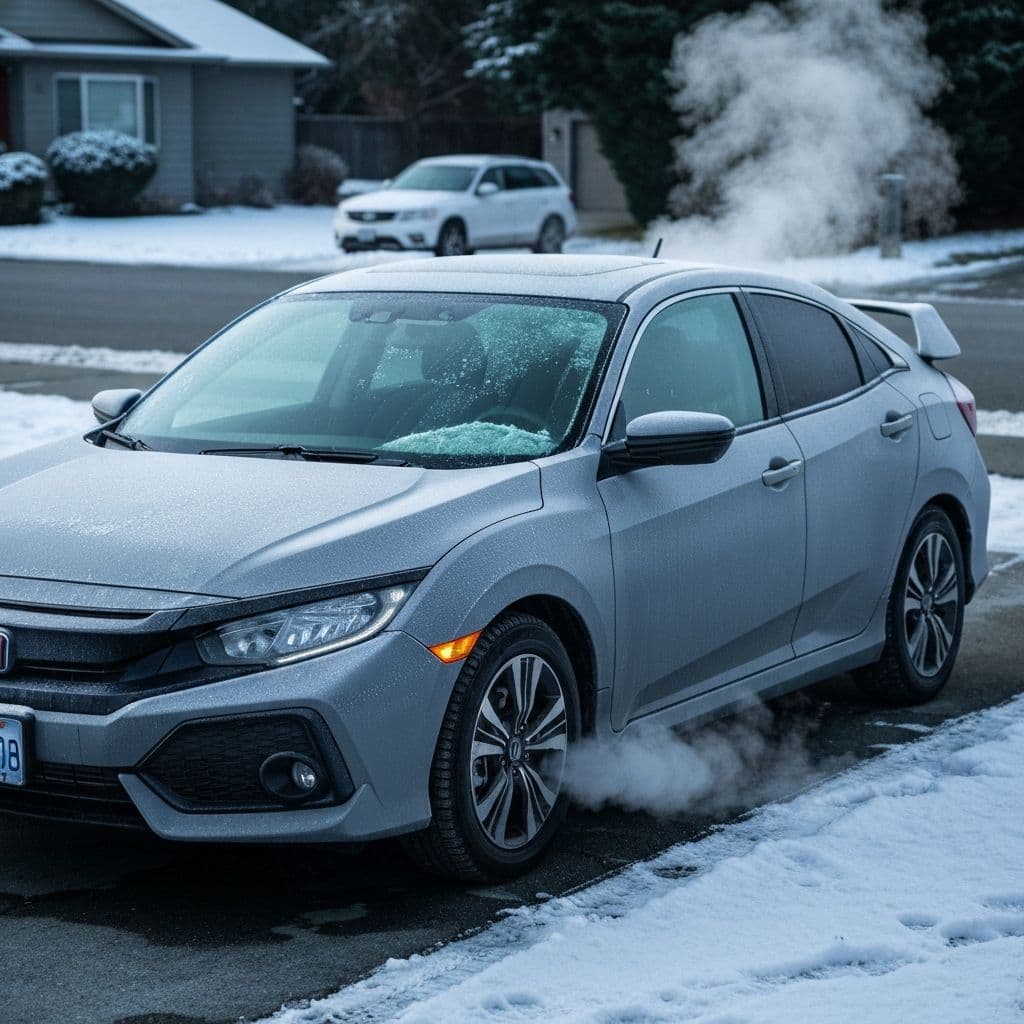
The old rule about letting your car idle for 10 minutes in winter? It's outdated. Here's what modern engines actually need on cold mornings.
Ask your parents or grandparents and they'll tell you to let the car run for 10 minutes before driving on cold mornings. It's advice that made sense for the carbureted engines of the 1970s. For any vehicle built since the early 1990s, it's outdated — and following it wastes fuel, increases emissions, and doesn't actually protect your engine the way the old-timers believed it did. Here's what modern engines actually need on cold mornings, and why the science changed.
Why the Old Rule Existed
Before electronic fuel injection became standard, engines used carburetors to mix fuel and air for combustion. Carburetors are mechanical devices that work less efficiently when cold; they tend to run rich (too much fuel, not enough air) until they reach operating temperature. Extended idling helped the carburetor reach a stable operating range before the engine was asked to perform. Electronic fuel injection replaced carburetors in most vehicles by the late 1980s and early 1990s. Fuel injection systems manage the fuel-air mixture electronically, compensating for cold temperatures automatically and near-instantaneously. The mechanical justification for long warm-ups disappeared with the carburetor.
What a Cold Engine Actually Needs
Two things happen in a cold engine that matter for wear:
- Oil is thicker when cold — Motor oil is formulated to flow at operating temperature. At cold temperatures — especially below 40°F, common in Tualatin's winter mornings — oil is more viscous and flows more slowly. It takes a few seconds after startup for oil pressure to fully build and for oil to reach all the bearings, valve train components, and other surfaces that need lubrication.
- The engine runs a richer fuel mixture — Fuel injection systems briefly run a richer mixture (more fuel relative to air) when cold to ensure stable combustion. This richer mixture washes a thin film of fuel across the cylinder walls, temporarily reducing the effectiveness of the oil film on those surfaces. Both of these conditions resolve quickly — within 30–60 seconds for the cold oil issue, and within a few minutes of driving for the rest. They don't require 10 minutes of idling. In fact, idling doesn't resolve them faster than driving does.
The 30–60 Second Rule
Here's what our ASE-certified technicians actually recommend for modern vehicles on cold mornings:
- Start the engine and idle for 30–60 seconds — This gives oil pressure time to build and oil to circulate through the engine's lubrication system before you put any load on it.
- Then drive gently — Driving at low RPMs and light throttle actually warms the engine to operating temperature faster than idling does. Combustion heat, load on the drivetrain, and the cooling system all contribute to reaching operating temperature.
- Avoid hard acceleration until the gauge reads normal — On a cold day in Oregon, this might take 3–5 minutes of driving. Let the temperature gauge tell you when it's ready.
Why Long Idling Is Actually Counterproductive
Extended cold idling doesn't just fail to provide additional benefits — it can cause problems:
- Fuel dilution — Excess fuel from a rich cold-idle mixture can make its way past the piston rings into the engine oil, reducing its lubrication effectiveness. Extended cold idling increases the amount of fuel that contaminates the oil.
- Carbon buildup — Extended idling at low RPMs contributes to carbon deposits on intake valves and injectors over time, particularly in direct-injection engines.
- Fuel waste — 10 minutes of idling every winter morning adds up meaningfully over a season in both fuel cost and wear.
- Emissions — Cold engines produce more unburned hydrocarbons than warm ones. Extended idling before the catalytic converter reaches operating temperature produces more emissions than a brief start-and-drive approach.
Winter Morning Preparation That Actually Matters
- Clear all windows before driving — Windshield, rear window, side mirrors, and snow from the roof and hood. Snow that slides onto your windshield while braking is a real hazard.
- Check tire pressure — Cold weather decreases tire pressure roughly 1 PSI for every 10°F drop. Tires properly inflated in October may be underinflated by January. See our guide on tire tread and pressure for what to look for.
- Check your battery — Cold temperatures reduce battery capacity significantly. If your battery is more than three years old, have it tested before Oregon's cold snaps hit. Our electrical services team can test and replace it while you wait.
Special Cases: When Longer Warm-Up Has Some Justification
- Diesel engines — Do benefit from slightly longer warm-up periods in very cold weather — typically 1–3 minutes, not 10. Modern diesel vehicles with glow plug systems minimize this, but it's a legitimate consideration.
- Older carbureted vehicles — If you're driving a vintage vehicle with a carburetor, the old warm-up advice applies. Give it enough time to idle smoothly before driving.
- Turbocharged engines — Turbochargers spin at extremely high RPMs and are lubricated by engine oil. Avoiding hard acceleration before the oil is fully warmed is particularly important. A 30–60 second idle plus gentle initial driving is good practice.
Frequently Asked Questions
- How long should I let my car warm up in winter? — 30–60 seconds of idle to build oil pressure, followed by gentle driving for 2–5 minutes until the temperature gauge reaches normal range. Extended idling doesn't provide additional benefit for modern fuel-injected vehicles.
- Does warming up your car in winter actually protect the engine? — A brief warm-up (30–60 seconds) does help by giving oil time to circulate before load is applied. Extended warm-up (5–10+ minutes of idling) doesn't provide additional protection and can introduce fuel dilution.
- Should I warm up my car if it's very cold outside? — The same principle applies, though sub-freezing temperatures benefit from the full 60-second idle before driving. The key is gentle driving for the first few minutes rather than extended idling.
- Does idling warm up the engine faster than driving? — No. Gentle driving warms the engine to operating temperature faster than idling does. Combustion load and drivetrain engagement generate more heat more quickly.
- Is it illegal to idle your car in Oregon? — Oregon has air quality regulations, but extended anti-idling rules primarily apply to commercial vehicles. Check local regulations if you have concerns.
Conclusion
The 10-minute winter warm-up is a habit inherited from a different era of engine technology. For any modern fuel-injected vehicle, 30–60 seconds of idle followed by gentle driving is all your engine needs. It protects the components that benefit from protection, gets you to operating temperature faster, and doesn't waste fuel or produce unnecessary emissions. For more practical winter car care questions, check our FAQ. And if your car is doing something unusual on cold starts — rough idling, hesitation, misfires, warning lights — those are worth having diagnosed by our engine specialists. Sherwood Auto Repair has been serving Tualatin drivers since 1986.
Ready to schedule your next service?
Our team is here to give you an honest assessment and expert repairs.
Schedule an Appointment