Most car batteries last three to five years, but summer heat does the damage and the first cold morning is when it shows. Here are the signs your battery is getting weak, what shortens its life, and when to have it tested before winter. If the excerpt also feeds the meta description, here’s a shorter version (about 150 characters) that won’t get cut off in search results: Most car batteries last 3 to 5 years. Learn the signs yours is fading, why batteries fail on cold mornings, and when to get it tested.
Car batteries rarely give much warning. Monday the car starts fine. Then the first cold snap rolls through, you turn the key on a 30-degree morning, and all you get is a slow, groaning crank or a single click.
So how long do car batteries last? For most cars, three to five years. Where yours falls in that range depends on the battery, how you drive, and the weather it has lived through. Below we'll cover what actually wears a battery out, the signs it's getting weak, and why so many of them seem to quit on the first cold morning of the year.
The Short Answer: 3 to 5 Years
AAA puts the typical lifespan at three to five years. In cooler climates a battery may last five years or longer, while in hot climates it's often closer to three. AAA also recommends having your battery tested every year once it reaches its third year.
Battery type matters too. Many newer cars, especially those with automatic start-stop, use AGM (absorbent glass mat) batteries. They're built for heavier electrical demands and often last longer than a standard battery, but they also cost more to replace. Some cars also need the new battery registered with the car's computer so the charging system treats it correctly. We take care of that as part of the replacement.
Why Batteries Die on Cold Mornings
Here's the part that surprises people. Heat is actually harder on a battery over its life than cold. Summer heat speeds up the chemical wear inside it. But you usually don't find out until fall.
Cold weather doesn't so much kill a battery as expose one that's already worn. A battery makes power through a chemical reaction, and that reaction slows down in the cold, so the battery has less to give. At the same time, cold engine oil is thicker and the engine is harder to turn over, so the starter asks for more. A battery that had just enough left in September may not have enough on a frosty November morning.
That's why a battery test in early fall is such a good habit. It tells you whether your battery is heading into winter strong or running on fumes.
Signs of a Dying Car Battery
Watch for these:
- A slow or labored crank. The engine turns over, but it sounds tired, especially first thing in the morning.
- Clicking when you turn the key or press the start button.
- Dim headlights or interior lights, particularly at idle or while starting.
- A battery or charging warning light on the dash.
- Electrical oddities, like the radio resetting or power windows moving slowly.
- Corrosion on the terminals. White, green, or blue crusty buildup around the battery posts.
- A swollen battery case or a rotten-egg smell. Those are signs to have it replaced soon, and to avoid handling it yourself.
- Age. If your battery is four or five years old and you've never had it tested, it's worth checking even if nothing seems wrong.
One thing to keep in mind: a battery that keeps dying isn't always a bad battery. A weak alternator or something drawing power while the car is off can drain a perfectly good one. Testing the whole charging system, not just the battery, is how you find out which it is.
What Shortens Battery Life
A few common habits wear batteries out faster:
Short trips. Starting the engine takes a big draw from the battery, and the alternator needs drive time to put it back. If most of your driving is a quick run to the store in Sherwood and back, your battery may never get fully recharged.
Sitting for long stretches. Modern cars draw a little power even when they're off. A car that sits for weeks can slowly drain its battery.
Heat. Every hot summer adds wear, even though the failure shows up later.
Loose or corroded connections. These make the battery and alternator work harder to do the same job.
How We Check Your Battery
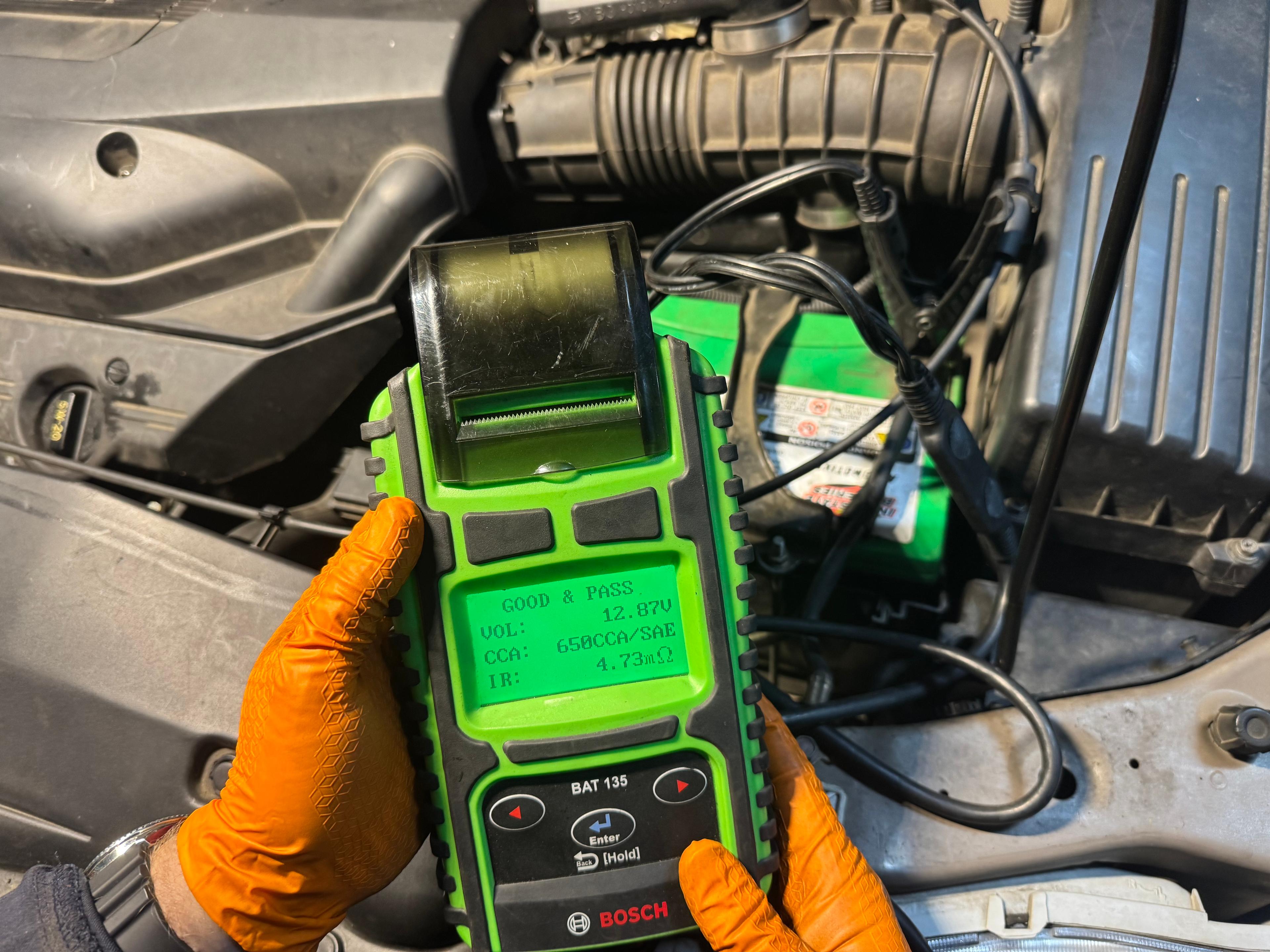
A battery test is part of the digital vehicle inspection that comes with every service visit at our shop, along with a look at the terminals and cables. We document what we find with notes and photos, and if the battery is getting weak, you'll see the results and get an estimate before anything happens. Safety items come first, and you decide what to do and when.
It's also one of the most common things an inspection turns up that nobody came in for. A customer recently brought his Honda Odyssey in for a rattle and an air conditioner that wouldn't blow cold. Along with fixing both, the inspection flagged a weak battery, plus a few other items coming due. None of it was on his list. That's the point of looking the whole car over.
How to Make Your Battery Last Longer
- Have it tested every year once it's three years old, ideally in early fall.
- Take a longer drive now and then if most of your trips are short.
- Keep the terminals clean and the connections tight.
- If a car will sit for weeks, ask us about a battery maintainer.
- Turn off lights and accessories before you shut the car off.
Frequently Asked Questions
Can a car battery last 10 years?
It's rare. A few batteries in mild climates with lots of regular highway driving last well beyond five years, but most don't. Planning on three to five years, and testing yearly after year three, keeps you from being surprised.
Does cold weather drain a car battery?
Cold doesn't drain the charge so much as reduce how much power the battery can deliver, right when the engine needs more to start. That's why weak batteries tend to fail on the first cold mornings of the season.
How do I know if it's the battery or the alternator?
If the car starts after a jump and then dies again soon, or the battery light stays on while driving, the alternator is a likely suspect. If it starts after a jump and runs fine until the next morning, the battery may not be holding a charge. A charging system test tells you for sure.
Should I replace my battery before winter?
If it's four or more years old or tested weak, replacing it in the fall is usually less stressful than finding out in a parking lot on a cold morning.
How long does a car battery last without driving?
It depends on the car and the battery's condition, but a few weeks of sitting can be enough to leave a healthy battery too weak to start some modern cars.
Start the Season With a Battery You Trust
Most car batteries last three to five years. Heat wears them out, cold mornings reveal it, and a slow crank or a clicking start is your cue to get it checked. If your battery is three or more years old, an annual test is cheap peace of mind.
We'll test your battery and charging system during your next visit to Sherwood Auto Repair. Schedule a visit, or read our FAQ to see how we work. We back our work with a 60-month/75,000-mile labor warranty, so you can drive worry-free.
Ready to schedule your next service?
Our team is here to give you an honest assessment and expert repairs.
Schedule an Appointment