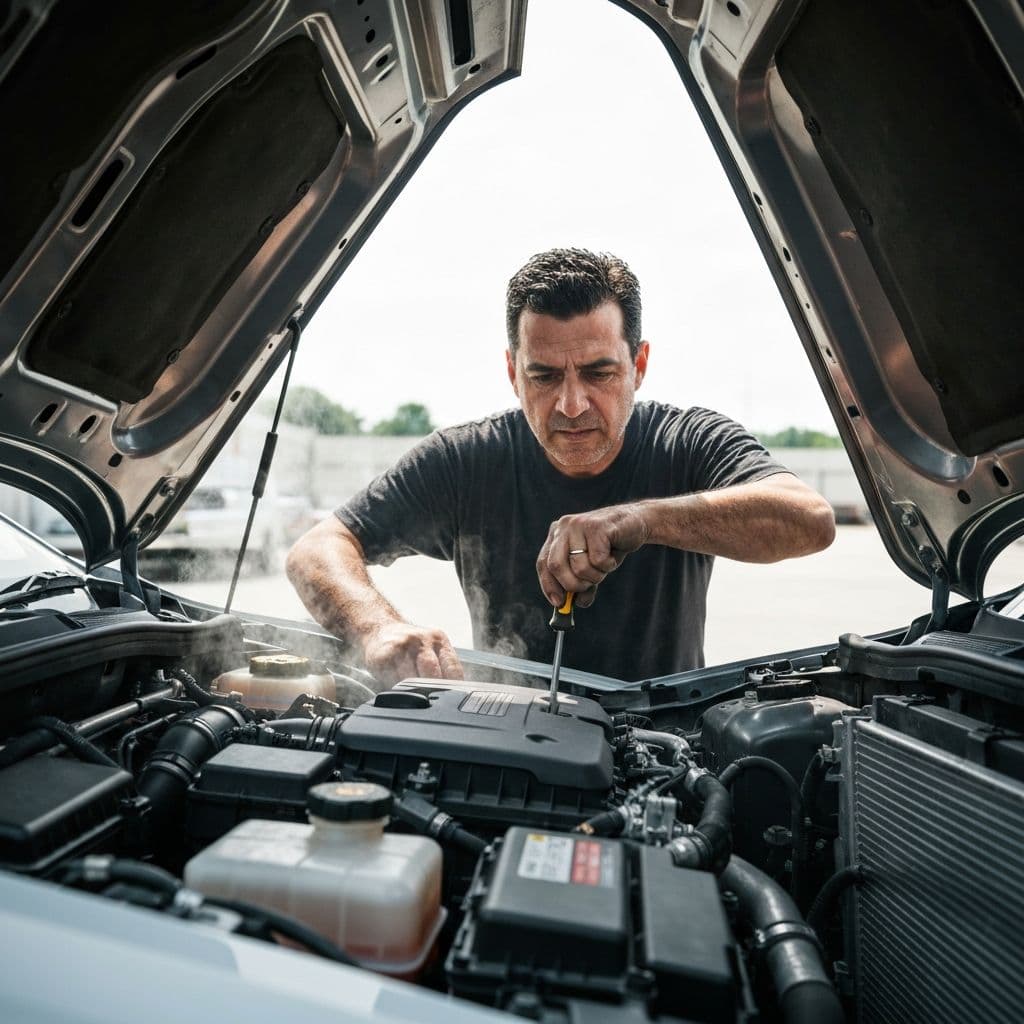
A car overheating is a serious warning. Learn the most common causes, what the signs look like, exactly what to do when it happens, and how to prevent it.
Your temperature gauge climbing into the red is not a "wait and see" situation. Car overheating is one of the fastest ways to go from a running vehicle to an expensive repair bill — or a totaled engine. Within minutes of the coolant boiling, you can have warped cylinder heads, a blown head gasket, or a seized engine. Understanding why it happens, what to watch for, and what to do in the moment can be the difference between a manageable repair and a catastrophic one.
What Temperature Is Normal?
The normal operating temperature for most passenger car engines is between 195 and 220 degrees Fahrenheit. Your temperature gauge's "normal" zone is the range the manufacturer calibrated for your specific engine. When you see the needle climb above that zone toward the red, the engine is running hotter than it's designed to.
Many modern vehicles also have a dashboard warning light — often a thermometer symbol — that illuminates when the engine temperature is critically high. Don't wait for the light. Watch the gauge.
Common Causes of Car Overheating
Coolant system problems are responsible for the majority of overheating events. Here are the most frequent causes:
- Low coolant level — Coolant (antifreeze) absorbs heat from the engine and carries it to the radiator to be dissipated. If the level drops from a leak, evaporation, or normal consumption in older vehicles, the system can't do its job. Low coolant is often the first thing to check.
- Coolant leak — Coolant can leak from several places: a cracked radiator, a failing hose, a damaged water pump, a leaking head gasket, or a cracked coolant reservoir. Sometimes leaks are visible as a puddle under the car. Sometimes they're internal — coolant leaking into the combustion chamber won't leave a puddle but will show up as white smoke from the exhaust and a sweet smell.
- Thermostat failure — The thermostat regulates coolant flow between the engine and radiator. A thermostat stuck in the closed position prevents coolant from reaching the radiator — the engine heats up with nowhere for the heat to go.
- Radiator problems — A clogged or leaking radiator can't dissipate heat effectively. Blockage can result from scale and rust deposits in old coolant, or debris on the exterior fins. A leaking radiator reduces coolant volume and pressure simultaneously.
- Failed water pump — The water pump circulates coolant through the engine. If the impeller fails, coolant stops circulating even if the level is fine. Water pump failure often comes with a coolant leak from the weep hole and sometimes a whining noise.
- Blocked or damaged radiator cap — The radiator cap maintains pressure in the cooling system. A pressurized system has a higher boiling point — meaning coolant can absorb more heat before it boils. A failed cap allows coolant to boil at a lower temperature, causing overheating even when the coolant level appears fine.
- Low oil level — Engine oil helps manage heat in addition to lubricating moving parts. Running significantly low on oil makes the cooling system work harder because oil is no longer helping carry heat away from critical components.
Signs Your Car Is Overheating
Don't wait for the gauge to hit the red zone. These early signals tell you the cooling system is struggling:
- Temperature gauge climbing — If your gauge is creeping upward — especially in stop-and-go traffic or on a hot day — pull over and let the engine cool before continuing.
- Steam or smoke from under the hood — Visible steam rising from the engine compartment usually means coolant has boiled over. This is an emergency stop situation.
- Sweet smell inside the cabin — Ethylene glycol (the base for most antifreeze) has a distinctively sweet smell. If you notice it inside the car, you likely have a coolant leak — possibly inside the heater core.
- Reduced heater output — The heater uses heat from engine coolant. If it suddenly blows cool air when it should be warm, it can indicate low coolant level.
- Warning light — The engine temperature warning light is a late-stage indicator, not an early warning system. If this light comes on, the engine is already in a dangerous temperature range.
What To Do When Your Car Overheats
Act immediately. Every minute of driving at a critical temperature does additional damage.
- Step 1: Turn off the air conditioning — Removing the AC load reduces engine demand immediately. If the temperature gauge begins dropping, you may be able to get to a safe stopping point.
- Step 2: Turn on the heater — This sounds counterintuitive, but turning the heat on full blast draws heat out of the coolant and into the passenger compartment, providing some emergency cooling.
- Step 3: Pull over safely and shut off the engine — Don't keep driving. Get to an exit or find a safe shoulder location. Turn off the engine.
- Step 4: Do not open the radiator cap on a hot engine — Coolant in an overheated system is under high pressure and much hotter than 212°F. Opening the cap can cause scalding coolant to spray. Wait at least 30–45 minutes for the engine to cool.
- Step 5: Check coolant level once the engine has cooled — If the reservoir is empty or very low, the system has either leaked or boiled over. Do not add cold water to a hot engine.
- Step 6: Call for help — Unless you've identified and resolved the specific cause, don't drive on. Call for a tow rather than risk driving with an overheating engine.
Summer Cooling System Maintenance
Heat is the enemy of cooling systems. As temperatures rise in Tualatin during July and August, vehicles that were managing fine all winter can show their first symptoms. A proactive summer maintenance check should include:
- Coolant level and condition inspection — Coolant degrades over time. Old coolant with depleted corrosion inhibitors is more prone to causing rust and scale inside the cooling system.
- Pressure test — A cooling system pressure test reveals small leaks that aren't visible under normal conditions.
- Thermostat function check — A thermostat that opens at the wrong temperature can become a real problem in summer heat.
- Radiator cap test — Tested with a pressure gauge to confirm it's maintaining proper system pressure.
- Hose inspection — Rubber coolant hoses harden, crack, and develop weak spots over time. A hose that looks fine can bulge and fail under sustained heat load.
- Belt inspection — On most vehicles, the water pump is driven by the serpentine belt. A failing belt puts the water pump at risk.
Conclusion
Car overheating is a manageable problem if you catch it early and respond correctly. It becomes an expensive one when you keep driving through warning signs. Watch your temperature gauge, know the early indicators, and if you see them — stop.
Sherwood Auto Repair has been handling cooling system repairs in Tualatin since 1986. If your vehicle has overheated or you want a summer cooling system check before the heat arrives, our ASE-certified technicians will diagnose the specific cause and give you a written estimate before touching anything. All cooling system repairs are backed by our industry-leading warranty.
Ready to schedule your next service?
Our team is here to give you an honest assessment and expert repairs.
Schedule an Appointment