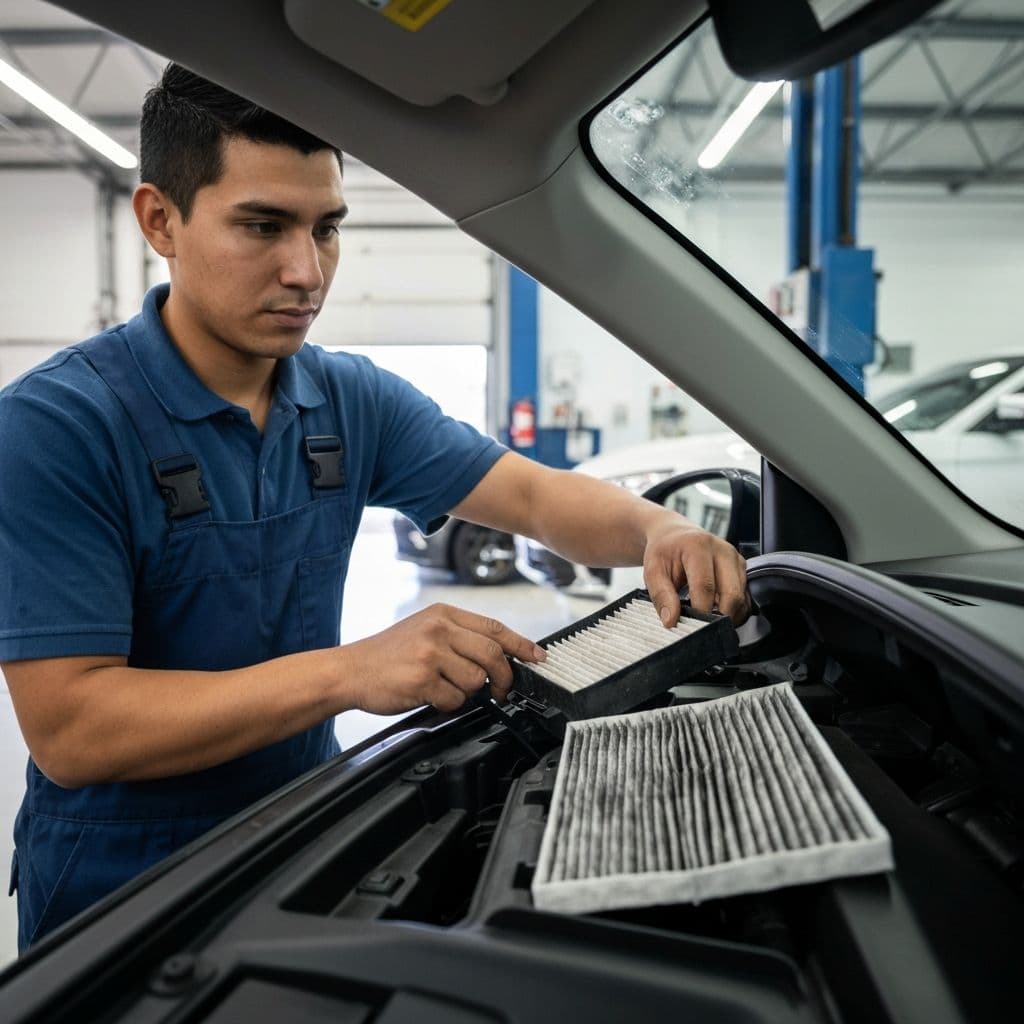
How do you know when your cabin air filter needs replacing? Learn the symptoms, replacement schedule, and why it matters more in the Pacific Northwest.
You change your engine's oil. You swap out brake pads when they wear. But the cabin air filter — the component filtering every breath of air you take inside your car — gets skipped by the majority of drivers until something forces the issue. If your AC seems weaker than it used to be, or you're getting a musty smell when the blower runs, your cabin air filter is probably the first thing to check.
Here's what the cabin air filter does, how to recognize when it needs replacing, and what to expect from the service.
What Is a Cabin Air Filter?
The cabin air filter sits in the airflow path between the outside air and your vehicle's HVAC system. All the air that enters your car through the heating, ventilation, and air conditioning system passes through it. Its job is to trap dust, pollen, mold spores, exhaust particulates, and other airborne contaminants before they reach the passenger compartment.
Most vehicles built after 2000 have one. On some vehicles it's behind the glove box; on others it's under the hood near the base of the windshield or under the dashboard. The location determines how accessible and time-consuming the replacement is.
This is a different component from the engine air filter, which protects the engine. The cabin filter protects you.
Why the Pacific Northwest Makes It More Important
In the Tualatin area, the cabin air filter works harder than it might in drier climates:
- Pollen season — The Willamette Valley has one of the highest pollen concentrations in the country, particularly during spring. Grass, tree, and weed pollen are major allergens for a significant portion of the local population. A clean cabin filter is the last line of defense between that pollen and the air you're breathing inside your vehicle.
- Mold and humidity — Extended wet seasons create conditions where mold and mildew can grow on a saturated, dirty cabin filter. A filter that's gone too long can become a mold source inside your HVAC system, creating odors and circulating spores.
- Wildfire smoke — Summer smoke events from Oregon and Washington fires have become increasingly common. Fine particulate matter from wildfire smoke is a genuine respiratory hazard. A fresh cabin filter provides meaningful protection during smoke events; a clogged one provides almost none.
Symptoms of a Dirty Cabin Air Filter
These symptoms often develop gradually, which is part of why the filter gets ignored:
- Weak airflow from the vents — A clogged filter restricts the volume of air that can pass through. Your AC or heat may not seem as strong as it used to, even on the highest fan setting. Often the fan speed gets turned up to compensate — which just puts more strain on the blower motor.
- Musty or stale smell when the HVAC runs — A dirty filter can harbor bacteria and mold. When the blower pulls air through it, you get that smell. If turning on the AC produces an unpleasant odor, the cabin filter and the evaporator should both be checked.
- Increased allergy or respiratory symptoms while driving — If you're experiencing sneezing, congestion, or irritation that seems to correlate with time in your vehicle, a saturated cabin filter that's no longer trapping allergens effectively is a likely contributor.
- Foggy or difficult-to-clear windows — Restricted airflow makes it harder for the defrost and defogging systems to work efficiently. If your windows are taking longer to clear than they used to, reduced airflow from a clogged filter could be part of the cause.
- Visible debris or discoloration — A cabin air filter pulled from a car that hasn't seen a change in 50,000 miles tells the whole story: dark gray, matted with debris. That's what was being filtered out of your air — or wasn't, once the filter was saturated.
When to Replace Your Cabin Air Filter
The standard recommendation is every 12,000 to 15,000 miles, or once a year. In practice, the right interval depends on your environment:
Replace every 12,000 miles or annually if you drive primarily in the Tualatin/Portland area with significant pollen exposure, you or a family member has allergies or asthma, or you frequently drive in stop-and-go traffic where exhaust particulate exposure is higher.
Replace every 15,000–25,000 miles if your driving is mostly highway with low particulate exposure.
Replace immediately if you notice any of the symptoms above, you've driven extensively during a wildfire smoke event without a fresh filter, or you're buying a used vehicle and don't know the service history.
A good rule: have the cabin filter inspected at every oil change. At Sherwood Auto Repair, we check it automatically and show you what we find.
What Does Cabin Air Filter Replacement Cost?
Cabin air filter replacement is one of the more affordable maintenance items. The filter itself typically costs $15–$40 depending on the vehicle and filter type (standard vs. activated charcoal). Labor is minimal on most vehicles; the filter is often accessible without tools or with simple disassembly of the glove box.
Total cost at a shop typically runs $30–$75. Some vehicles with complex access paths cost more for labor. Ask when you schedule.
Conclusion
Cabin air filter replacement is a $30–$75 service that has a real effect on what you breathe every time you're in your car. In the Pacific Northwest — between pollen season, wildfire smoke, and the extended wet weather that promotes mold growth — it's genuinely more important than in many other parts of the country.
If you can't remember the last time yours was changed, that's enough reason to have it checked. Sherwood Auto Repair inspects the cabin filter at every service visit and can replace it while you're already in for an oil change. Check our FAQ or schedule your service today.
Ready to schedule your next service?
Our team is here to give you an honest assessment and expert repairs.
Schedule an Appointment